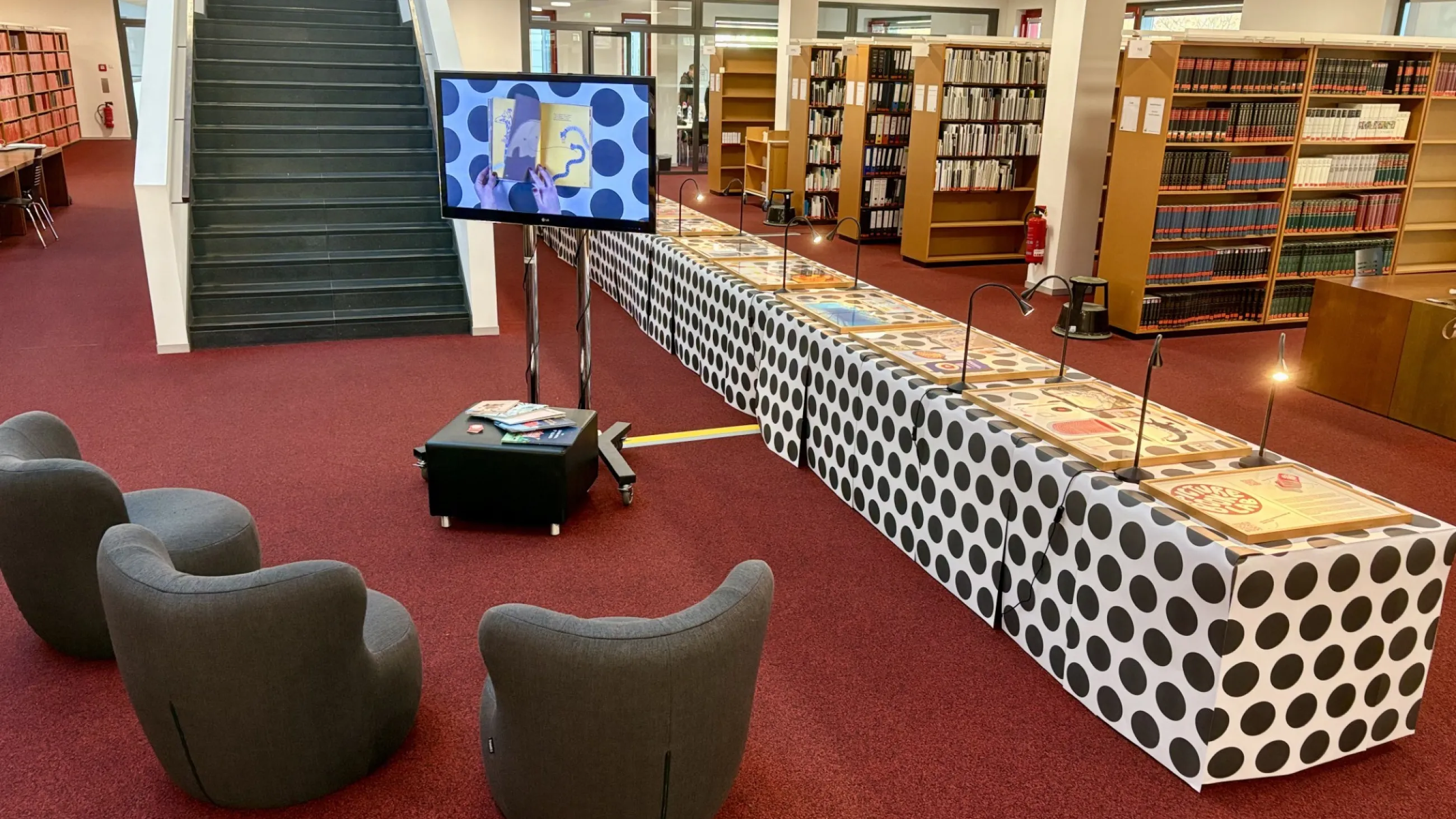
Libraries & culture as a counterbalance to right-wing extremism & disinformation
Potsdam Science Day with the University of Applied Sciences Potsdam
Open Day
Dates
More eventsLatest news
More news
Understanding Dementia. A Series of Workshops for Family Carers.
The FAMteam's series of workshops on the topic of "Caring for relatives" is being expanded to include a free, external programme. Find out everything you need to know about dementia and how you can deal with your family members appropriately.

Libraries and culture as strong partners against right-wing extremism and disinformation
How can libraries and cultural projects effectively defuse right-wing extremist narratives and disinformation? What role do education, Arts Management and Cultural Work and information literacy play in this? And what contribution can the Arts Management and Cultural Work and Library Sciences degree…

The Campus will Change in April - Start of Construction for New Building "V"
On the 20th of April 2026, construction work will begin on the new building "V" on the campus of the University of Applied Sciences Potsdam. The construction site is located between the Kiepenheuerallee access road, House 17/Casino and the solar pavilion.

Security in Dealing With a Sensitive Topic
In this interview, Prof Dr Karin Borck provides insights into the new training course "Grief in the workplace" at the University of Applied Sciences Potsdam and shows why uncertainty in dealing with grief is so widespread.

Shape the FHP of tomorrow
With the Freiraum project, a comprehensive reform process for organisational development is taking place at the University of Applied Sciences Potsdam until 2028.
The aim is to improve internal structures, promote interdisciplinary collaboration and use resources more efficiently.
The University Day 2025 was an important step: over 100 participants discussed specific approaches for a sustainable organisational structure.
All details and results can be found online on the project page.
Departments & Degree Programmes at the University of Applied Sciences Potsdam
For 30 years, the University of Applied Sciences Potsdam has offered a diverse range of courses with a personal working atmosphere in the departments of Social and Educational Sciences, CITY | BUILDING | CULTURE, Civil Engineering, Design as well as Information Sciences.
Social and Educational Sciences
Department 1 was the first department at the University of Applied Sciences Potsdam and is also the largest department with approximately 1,000 students.
CITY | BUILDING | CULTURE
The various degree programmes and focal points of department 2 are interlinked via a cultural and (cultural) design claim.
Civil Engineering
Department 3 has been training young people to become civil engineers for 25 years and has seven laboratories that are used for research and study.
Design
Characteristic of department 4 is the close integration of its degree programmes in Interface, Communication and Product Design and European Media Studies.
Information Sciences
Department 5 is known for its study concept of partially integrative training of archivists, librarians and information managers – also called the "Potsdam Model".
Degree Programmes
Find out about our more than 30 Bachelor's and Master's degree programmes and the various study options – from full-time face-to-face studies to dual degree programmes and part-time programmes.