Interview
Security in Dealing With a Sensitive Topic

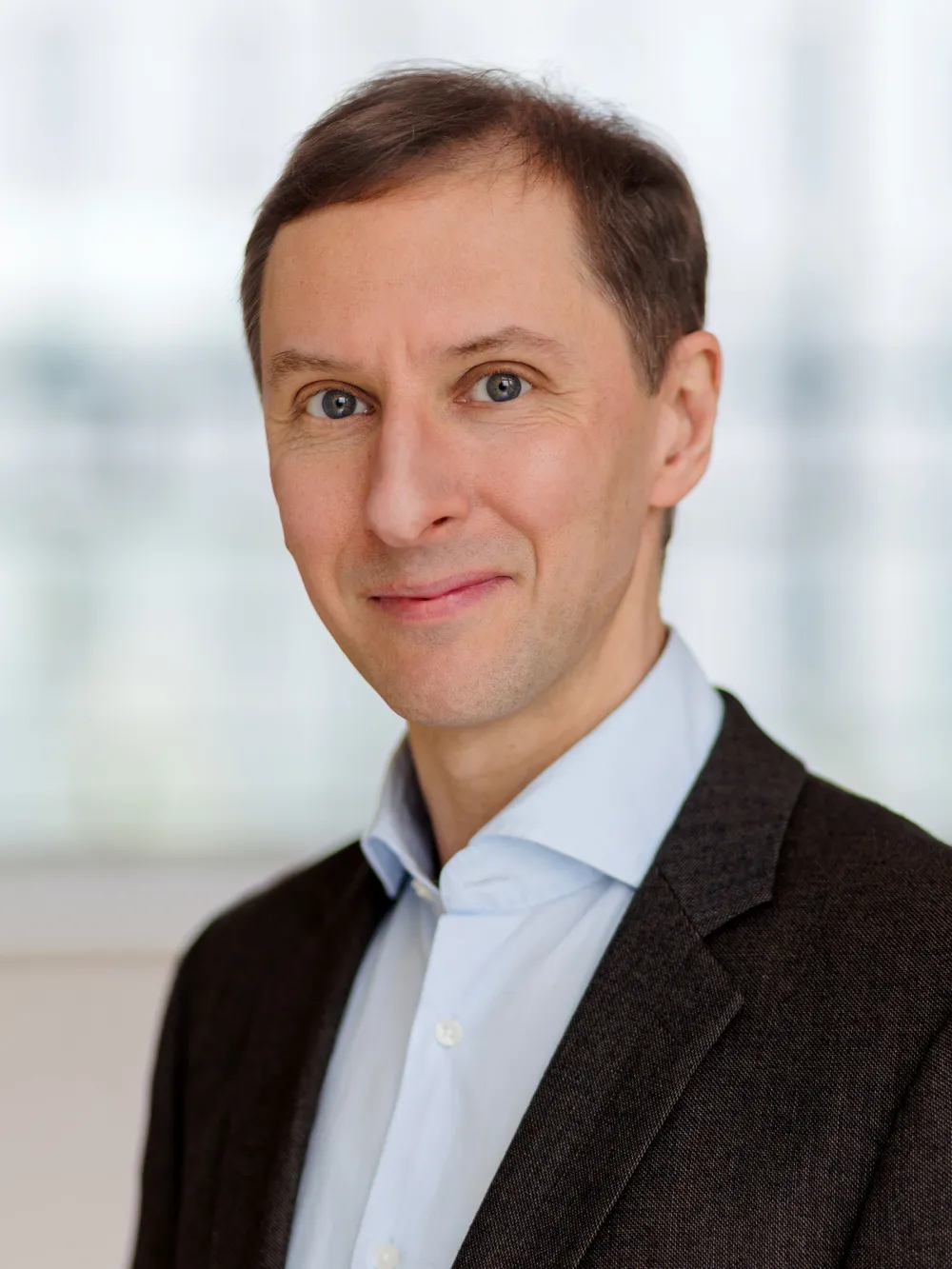
In this interview, Prof Dr Karin Borck provides insights into the new training course "Grief in the workplace" at the University of Applied Sciences Potsdam and shows why uncertainty in dealing with grief is so widespread.
Prof. Dr Karin Borck's training teaches how organisations can develop confidence in dealing with loss and grief - a topic that is often underestimated in the work context, but has a major impact on team culture, trust and employee loyalty.
How did you personally come to this topic?
I personally came into contact with the topic as a university lecturer when I supported two student bereavements - including the death of a student. I realised that there is a great deal of uncertainty in dealing with this: What do you actually do when a student passes away? Who is responsible for what?
We dealt with it well at the time and I also went to the funeral. There it became very clear to me once again how important it was for the relatives that someone from the university was present. For the parents, I was a bridge to a world they didn't know themselves.
This experience showed me how important the topic is - especially in a work context. In other words, where people work, you need a good way of dealing with grief. I then set out on a search: what is actually available on the subject? In the private sphere, there are many offers for grief counselling, but surprisingly few in the context of work.
Yet loss is part of life. From my experience - also in management consultancy - I realised that it is important to convey confidence in dealing with this topic. How do we deal with it well?
What motivates you and what would you like to pass on?
It is important to me to convey that it is possible to learn how to deal with grief - even professionally. At the same time, you have to face up to the issue.
Managers and people in the HR department in particular have a responsibility here. You can delegate tasks, but you can't just "give the topic away". Managers have to deal with it visibly.
There are also studies that show this: Employees observe very closely how their manager reacts in crisis situations. This has a major impact on the corporate culture, the working atmosphere and also on whether employees stay with the company. Dealing well with crises is therefore crucial.
What exactly is the "Grief in the workplace" seminar about?
An initial focus is the question: What is grief actually? There are new scientific findings in this area. Traditional phase models are becoming less important - instead, we now talk more about grieving tasks or lasting relationships that are shaped.
Another important point is sensitisation: the topic should be taken out of the taboo zone. At the same time, the aim is to gain more confidence in communication - for example when dealing with colleagues who have experienced a loss.
A second focus is on sharing experiences. Death and grief are topics that almost everyone has had to deal with at some point. The seminar is about learning from each other, sharing good examples and jointly developing approaches for your own organisation. Because there is no one-size-fits-all solution - every company has to find its own way.
The third module is a kind of toolbox: What concrete options for action are there? What can you prepare? What examples of best practice are there?
For example: How do you deal with the situation when the workplace of a deceased colleague has to be closed? We provide specific suggestions here.
Who is the course particularly suitable for?
The course is primarily aimed at managers and employees in HR departments or in occupational health management.
At the same time, it is open to anyone who would like to explore the topic and gain more confidence in dealing with grief in a work context. A certain level of interest in the topic is important.
Can the topic also be dealt with as part of in-house formats?
Yes, that is possible. In acute situations, it's less about traditional training and more about thinking about it together: How do we want to deal with this as a team? How do we want to remember?
A practical example: A young nursing manager who had two children died in a hospital. The team then created a book for the children describing how their mother was perceived at work. That was a very touching and helpful form of remembrance - and it came directly from the team.
Such processes cannot be imposed from outside, but they can be moderated.
What role does the environment play in this - for example the family?
Grief always affects a wider context. When a colleague passes away, it not only affects the team, but also the family.
An example: when a workplace was cleared out, not everything was simply packed up and handed over. Instead, the husband and daughter were invited. The workplace was decorated with a candle and flowers, and the team cleared out the desk together with the family. The daughter later experienced this as very positive.
This shows that mourning goes beyond the company and should be seen as such.
To conclude: What specifically do the participants take away from the seminar?
On the one hand, concrete impulses and a kind of toolbox for dealing with grief in the work context. Secondly - and this is almost more important - many lose the fear of doing something wrong.
Because it is precisely this uncertainty that is often the biggest obstacle: What do I say? Do I even broach the subject? How do I deal with situations such as a miscarriage?
This is where the seminar provides guidance and reassurance.
Further training & in-house offer
If you would like to strengthen the handling of grief in the work context in your organisation, the further training course Grief in the Workplace offers practical impulses, exchange and concrete possibilities for action.
The seminar can also be booked as an in-house format - individually tailored to your organisation or team.