
You will acquire interdisciplinary knowledge and skills in research and management in order to develop and implement innovative approaches in educational practice. On the research-oriented Master's programme in Early Childhood Education Research, you will benefit from a strong network and work as an expert in early childhood education in research, training, management or consulting. The programme is offered in cooperation with the University of Potsdam, and you will receive a degree certificate from both the University of Applied Sciences and the University.
Early Childhood Education Research (MA)
Highly qualified in early childhood education
Profile:
Social Space – Education, Participation, Community
Degree:
Master of Arts
Type:
full-time
Course language:
German
Standard study period:
4 semesters
Start of study:
Winter semester
Application deadline:
15/06 – 11/10 (free of admission)
Admission requirements:
First professional university degree, proof in empirical research methods
Credits:
Module Manuals & Regulations
120 ECTS credits
Profile
Research, steer and develop
In terms of content, the degree programme focuses on research into the design of pedagogical processes for children aged 0 to 12 years and thus includes early childhood as well as day care in day nurseries and after-school care. A central component of the study programme is application-related basic research on questions of early childhood education and development, which are deepened within the framework of the student's own research interests.
The aim of the Master's programme Early Childhood Education Research is to train students for highly qualified positions in research, specialist training and professional management. A wide range of professional perspectives open up after completion of the programme.
The focus of the Master's programme is the student's own research interest. This gives students the opportunity to deepen their competences in scientific work from the very beginning. An essential component of the programme is scientific work based on empirical research methods, whereby quantitative-experimental approaches play a particularly important role alongside qualitative approaches. Half of the workload (60 ECTS credits) is therefore completed by developing one's own research project and implementing it within the framework of the Master's thesis. Here, the students – accompanied and supported by the lecturers and fellow students – go through all phases of the empirical research process. This is flanked by corresponding courses. The courses in the research focus are designed as colloquia, which enable open and cooperative work as well as cross-year learning. The modules on the research focus are accompanied methodically and in terms of content by courses in subject and reference sciences as well as in empirical research methods. This gives students the opportunity to deal intensively with a topic, to act as researchers at the same time and to cooperate with partners from research, control and practice in their research area.
Image films: Study Early Childhood Education Research
Source:
AG Frühkindliche Bildungsforschung
- What makes this degree program special?
- What are some of the most interesting aspects of the program?
- What is student life like?
- What is the atmosphere like between students and faculty?
- What sets the teaching apart?
- Why is this degree program important?
- How do you assess the career prospects?
- Who would you recommend this degree program to, and why?
- Why should someone pursue this degree program?
Get to know the Master's programme Early Childhood Education Research in under 8 minutes!
- Was zeichnet die enge Verzahnung von Forschung und praktischer Arbeit mit Kindern in diesem Studiengang aus?
- Wie profitieren Studierende davon, eigene Forschungsprojekte vollständig selbst durchzuführen?
- Welche Bedeutung hat der reale Lern- und Forschungsort mit Kindern und Pädagogen für die Ausbildung?
- Wie unterscheidet sich der Studiengang durch den Einsatz vielfältiger Methoden und digitaler Medien?
- Inwiefern bereitet der Studiengang gezielt auf wissenschaftliche, praktische und leitende Tätigkeiten in der frühkindlichen Bildung vor?
Is this degree programme right for me?
During your studies, you will develop your own research project and implement it as part of your Master's thesis. You will go through all phases of the empirical research process-accompanied and supported by your lecturers and fellow students. Our degree programme is characterised by an open and cooperative atmosphere. The courses are held in German, but a large part of the international research literature on early childhood education is published in English.
You bring these qualities with you
- Interest in research on the developmental and educational processes of children
- Independence, self-reflection and critical judgement, participation in social discourse
- Ability to read and understand professional texts in English
WG Early Childhood Education Research
Unsure? On the Instagram channel of the WG Early Childhood Education Research you can get more insights into research and our activities.
Fragen & Antworten zum Studiengang
Kurzes Video (3 Minuten)
Studierende, Lehrende und Ehemalige beantworten Fragen zum Studiengang Frühkindliche Bildungsforschung:
- Was ist das Besondere am Studiengang, was sind spannende Studieninhalte und was zeichnet die Lehre aus?
- Wie ist das Studierendenleben an der Fachhochschule Potsdam und Universität Potsdam?
- Wie läuft das Miteinander zwischen Studierenden und Dozierenden?
- Für wen eignet sich der Studiengang und welche Karrierewege ergeben sich?

Längeres Video (8 Minuten)
- Was zeichnet die enge Verzahnung von Forschung und praktischer Arbeit mit Kindern in diesem Studiengang aus?
- Wie profitieren Studierende davon, eigene Forschungsprojekte vollständig selbst durchzuführen?
- Welche Bedeutung hat der reale Lern- und Forschungsort mit Kindern und Pädagogen für die Ausbildung?
- Wie unterscheidet sich der Studiengang durch den Einsatz vielfältiger Methoden und digitaler Medien?
- Inwiefern bereitet der Studiengang gezielt auf wissenschaftliche, praktische und leitende Tätigkeiten in der frühkindlichen Bildung vor?
Profile, focus & PINA
Scientific profile & research focus
Contact
The staff members at the Student Counselling Services provide information to prospective students, first-year students, parents, teachers and students on all general questions about the degree programme. If you have specific questions or concerns about the Master's programme in Early Childhood Education Research, please contact the programme coordinator or programme director.
Head of Degree Programme

Chair of Research and Practice Development in Early Childhood Education
Associate Head of Degree Programme
Prof. Dr. Jan Lonnemann
Professur für „Empirische Kindheitsforschung“ (Universität Potsdam)
Programme Coordination

Coordination Early Childhood Studies (M. A.)
Part-time Social Work Coordination (B. A.), BASA-online
Implementation of financial processes in the department (as a substitute)
These degree programmes might also interest you
More degree programmes| Department | Degree programme | Teaching language | Start of study | Application deadline |
|---|---|---|---|---|
| |
Early Childhood Education Research (MA) | German | Winter semester | 15/06 – 11/10 (free of admission) |
| |
Social Work with Families (MA) | German | Winter semester | Disclaimer: Starting in the winter semester 2026/27, this programme will be offered as a Master's degree in Sustainable Social Work: Children and Families. |
| |
Sustainable Social Work: Child/hood and Family (MA)* | German, English | Winter semester | 15/05 - 22/06 (admission restricted) Note: Studies begin in the winter semester 2026/27 |
Career Prospects
Career Prospects
In recent years, research on early childhood education has gained in importance. As a result, the need for scientifically qualified experts is increasing – be it in supporting organisations, professional associations, institutions or in the research field. The degree programme Early Childhood Education Research prepares you for research activities at universities and in research institutes as well as for the conceptualisation, evaluation, further development and control of offers and measures for content-related quality development in the field of early childhood education.
Research and Development
- Research and teaching at universities, universities of applied sciences and research institutes
- (Practical) research, development and planning at universities and non-university institutions
- Quality and team development and evaluation
- Personnel and organisational development
- Doctoral studies
Offer and advice
- Specialist and organisational advice
- Early education and early help counselling centres
- Training and further training of early childhood education staff (e.g. at technical colleges, further education institutions, youth education centres and in state and federal programmes)
- Public relations work and professional political representation as well as socio-spatial and communal coordination and networking tasks.
Management and control
- System control and administration at municipal, state and federal level
- Management of early education projects (in foundations, providers, professional associations)
- Coordination of supporting organisations and professional associations
- Administrative and management positions in education and social services, especially in state or non-state institutions of early childhood education, youth welfare, continuing education and the school system
- National, regional and local planning functions
- Quality management: development and assurance of pedagogical quality at provider organisations and professional associations
- Representation of the sector in policy-making and networking tasks in socio-spatial and communal contexts.
Alumni voices
Here, former students report on their motivation for choosing a Master's degree programme in Early Childhood Education Research, on their professional and academic careers to date and on their careers after graduation.
These degree programmes might also interest you
More degree programmes| Department | Degree programme | Teaching language | Start of study | Application deadline |
|---|---|---|---|---|
| |
Early Childhood Education Research (MA) | German | Winter semester | 15/06 – 11/10 (free of admission) |
| |
Social Work with Families (MA) | German | Winter semester | Disclaimer: Starting in the winter semester 2026/27, this programme will be offered as a Master's degree in Sustainable Social Work: Children and Families. |
| |
Sustainable Social Work: Child/hood and Family (MA)* | German, English | Winter semester | 15/05 - 22/06 (admission restricted) Note: Studies begin in the winter semester 2026/27 |
Study Content
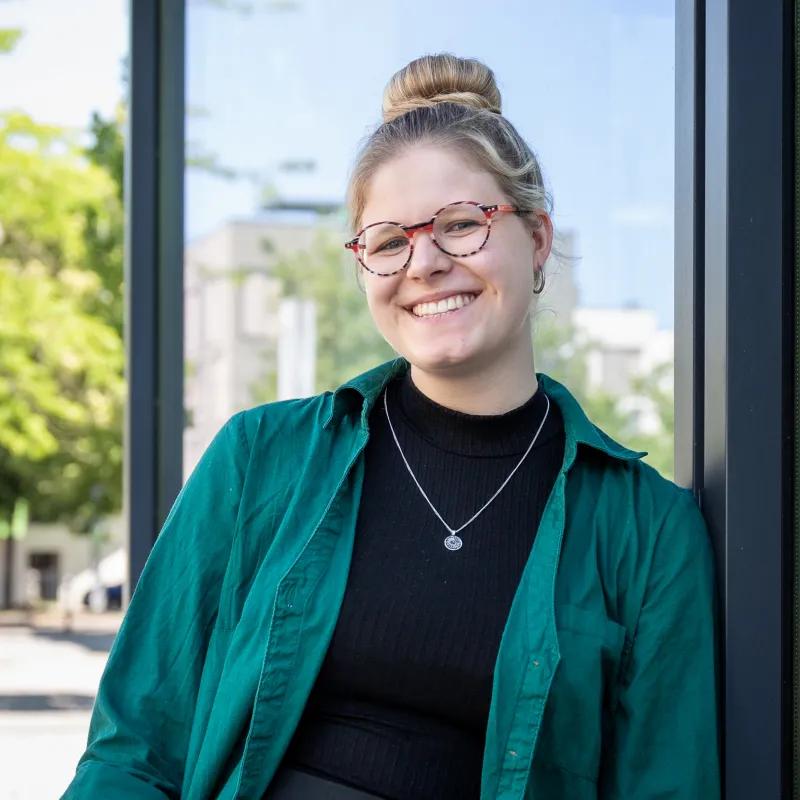
© Andrea Vollmer What excites me most is the variety of seminars in the master’s program, which offer insights into different areas of early childhood education research. I find the practical focus particularly exciting, as well as the research project, which I can help shape myself from the initial idea all the way through to my master’s thesis. Currently, my master’s thesis focuses specifically on quantitative research in the field of object individuation.
Laura Mareen Rösler
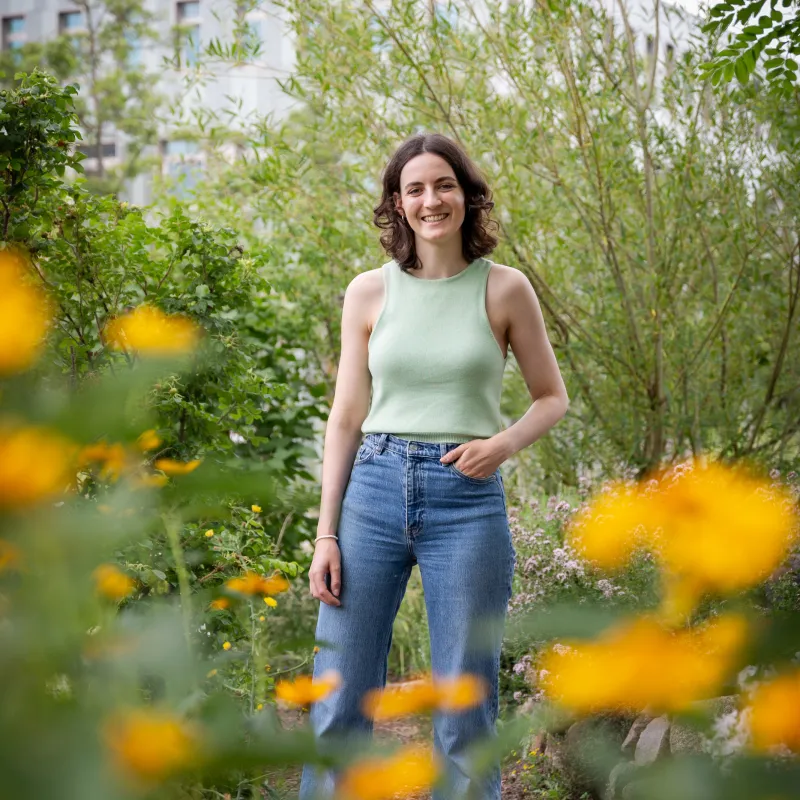
© Andrea Vollmer I’m inspired by the combination of independent research, a family-like atmosphere, and peer-to-peer exchange. From the very beginning, I’ve been shaping my own research topic and deepening my methodological knowledge. The close contact with faculty and the move to a new city were particularly formative for me—I’ve grown both professionally and personally as a result. It’s ideal for anyone who is curious about research and wants to continue developing their skills. In my master’s thesis, I’m investigating what kind of explanations—simple or complex—four-year-olds prefer in biology and physics, and what role their prior knowledge plays in this.
Celine Fink
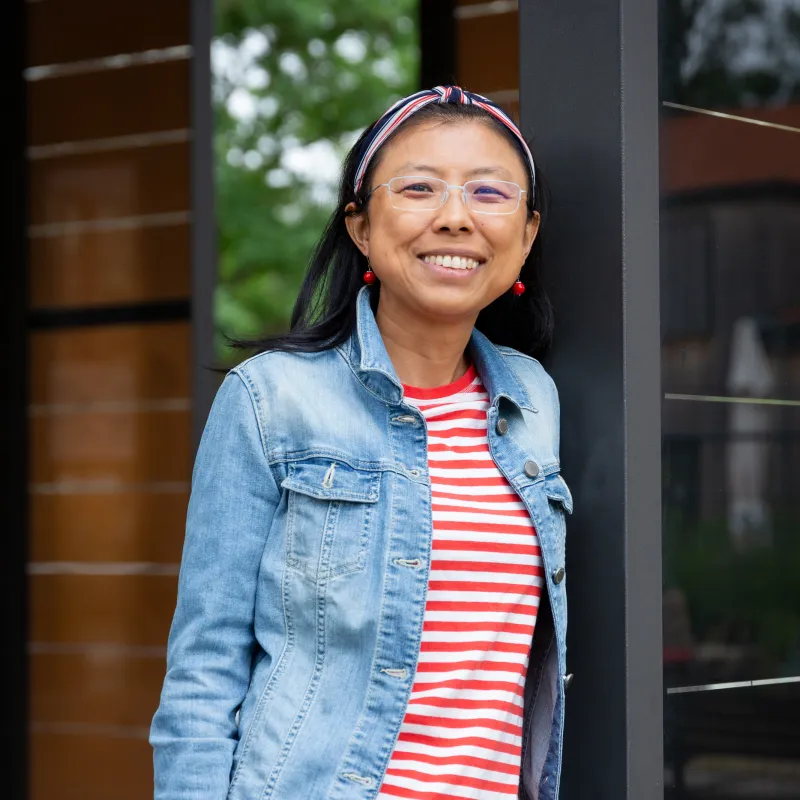
© Andrea Vollmer For me, studying at the FHP is both academically sound and personal at the same time. Small seminars and an open atmosphere enable real participation. I have acquired sound knowledge of social research and pedagogy and work in a reflective and interdisciplinary way. A clear recommendation for anyone who wants to shape educational practice based on research.
Jiayan Jordan
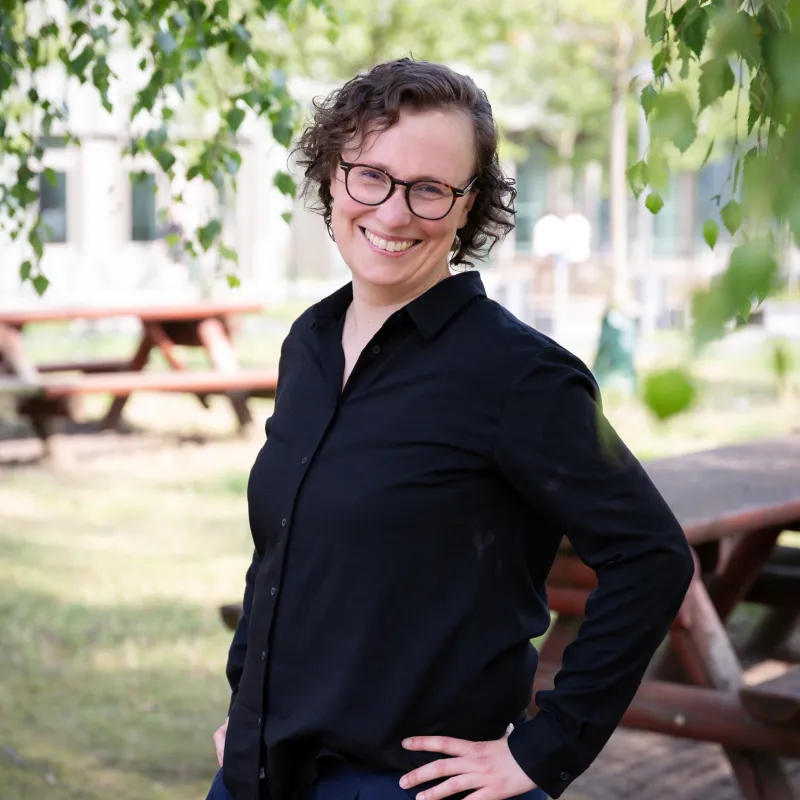
© Andrea Vollmer What excites me most about studying at the FHP is the close interaction with faculty and fellow students. The enthusiasm for topics in early childhood education research is palpable. This allows me to grow both professionally and personally. I recommend this program to anyone who approaches the world with curiosity, is passionate about research, and wants to make a difference at every level of educational processes. In my master’s thesis, I am investigating whether the ability of children aged 5 to 6 to empathize with others’ feelings is linked to the democratic attitudes of early childhood educators (e.g., equality and tolerance).
Sabine Rose
After earning my bachelor’s degree in Early Childhood Education at the University of Applied Sciences Potsdam and gaining subsequent practical and international experience, I was delighted to return to the university to pursue a MA degree in Early Childhood Education Research. In my self-designed academic master’s project, I focus on the collaboration between families and early childhood educators, thereby building on the project related to the Brandenburg Education Plan. I am particularly excited by the opportunity to connect my own research topics with existing research priorities. I also find it valuable to actively engage with research and gain diverse experiences across various fields.
Leonie Niefünd
What I particularly appreciate about the MA programme in Early Childhood Education Research is the interdisciplinary exchange with fellow students from diverse academic backgrounds. Thanks to my bachelor’s degree in patholinguistics, I am able to contribute my own perspectives and knowledge to the seminars and benefit from the diverse experiences of others. I find it particularly enriching to have the opportunity to further deepen my passion for language—especially with regard to the quality of interactions with children and their significance for early childhood educational processes.
Lucy Dunst


Course of studies
The standard period of study for the full-time degree programme Early Childhood Education Research is four semesters and concludes with a Master of Arts degree.
The degree programme can be completed full-time or adapted to individual needs and completed part-time.
Here you can find the exemplary study plan for full-time studies as well as exemplary suggestions for extending or planning studies on a part-time basis. In the case of part-time models, it should be noted that seminars may overlap in terms of time. If this is the case, the head of the programme should be informed so that an individual solution can be sought together.
| Semester 1 | Subject modules |
| Semester 2 | Subject modules, compulsory elective modules, project work |
| Semester 3 | Subject modules, compulsory elective modules, project work |
| Semester 4 | Master's thesis, Master's colloquium |
Course planning for full-time studies (4 semesters)
Course planning for part-time studies (6 semesters)
Course planning for part-time studies (8 semesters)
Study Content
In the currently valid module handbooks and study and examination regulations of the Department of Social and Educational Sciences, you will find the module overview, a detailed description of the modules and study contents as well as the study plan for the degree programme in Early Childhood Education Research.
Teaching formats
The focus is on teaching formats that enable independent, cooperative and research-based learning in small to medium-sized groups.
- Seminars
- Exercises
- Research and literature colloquia
- Small group projects
- Participation in research projects
Subject modules
- Methods and Concepts of Empirical Childhood Research
- Developmental Psychology & Childhood Education
- Introduction and research question
- Diagnostics, Intervention, Prevention
- Scientific-theoretical foundations of childhood research
- Concept and design
- Data collection and evaluation
Electives
- Consulting
- Management & Leadership
- System Control
- Scientific Community
Projects and excursions
- Depending on current topics and cooperation partners as well as respective offers for visits and expert conferences
Thesis
- Independent writing of a Master's thesis
Manuals and Regulations
In the currently valid module manuals and study and examination regulations of the Department of Social and Educational Sciences, you will find the module overview, a detailed description of the modules and course content, as well as the study plan for the Early Childhood Education Research program.
Research: Profile, Focus Areas, Laboratories & PINA
During the programme, you will develop and carry out your own research project as part of your MA thesis. With the support and guidance of faculty members and fellow students, you will experience all phases of the empirical research process. Our programme is characterised by an open and collaborative atmosphere. Although courses are taught in German, much of the international research literature on early childhood education is published in English.
Projects
More projects
FEEL - Feeling, Recognising, Assessing, Learning
Extended reality and AI-supported counselling for parents in understanding and dealing constructively with their children's emotions

Participatory Interactions in Care and Sleep Situations
The aim of the ‘PIPS’ project is to enhance the participation of infants and toddlers in nurseries. To this end, interactions during care and sleep routines are being studied across the country to gain a comprehensive picture of current practice. Based on the data collected, approaches will be developed to support early years professionals in promoting children’s rights and democratic skills from…

BeoKiz - Observation and Assessment in Everyday Daycare: Child-Centred and Holistic
"BeoKiz" is a project that we are implementing in collaboration with the Institut für Fortbildung Forschung & Entwicklung e.V. on behalf of the Berlin Senate Department for Education, Youth and Family from August 2020 to December 2022.

INSO - Inclusion in the Social Environment
The research project "Inclusion in the Social Environment – Participatory, child-rights-based school development through pupil-led research" aims to investigate the conditions necessary for the success of inclusive schools and to provide general recommendations for action.

Die Babyhelfer - Virtual Psychological Counselling for Expectant and New Parents - Die Babyhelfer-App
The aim of the "Babyhelfer" project is to use an app to provide expectant and new parents with virtual psychological support, in order to alleviate the shortage of care for certain sub-clinical and psychological issues.

EDIT - Development of Dialogue-Based Interaction and Participation
EDIT is a collaborative practice-based research programme run by the University of Applied Sciences Potsdam (FHP) and the University of Potsdam. Within EDIT, practice development and practice-based research are applied to foster dialogic interaction and participation in early childhood education.

Any-Cubes - Discover Artificial Intelligence Through Play
Any-Cubes researches and develops the toy of the future.

EQUIP - Development of Quality and Interaction in Everyday Pedagogical Life
A cooperative practical research programme of the University of Applied Sciences Potsdam and the University of Potsdam on quality development in early education.
Lecturers
Lecturers at the University of Applied Sciences Potsdam
Head of Degree Programme
Chair of Research and Practice Development in Early Childhood Education
Dean

Professor of Early Childhood Education Research
Head of PINA Research Laboratory
Academic Staff Member

Academic Assistant in the Degree Programme Early Childhood Studies (M. A.)
Lecturers at the University of Potsdam
Associate Head of Degree Programme
Prof. Dr. Jan Lonnemann
Chair of Empirical Childhood Research (University of Potsdam)
Academic staff member
Academic staff member
FAQ
Frequently asked questions about the MA programme "Early Childhood Education Research"
Application & Contact
Dates & requirements for your application
The most important deadlines, dates and admission requirements for the Master's programme in Early Childhood Education Research are compiled here. You can find out which steps you need to take for a successful application in the next section.
Dates
- by 15th of August: apply for enrolment
- 10th of July, 2.00 to 3.00 pm: Online information session
Access requirements
First professionally qualifying university degree (180 ECTS credits) and proof of 5 ECTS credits in research methods in the field of early childhood education or a related degree programme, e.g:
- educational, social and cognitive sciences
- humanities with a corresponding specialisation (childhood, education)
This is how you apply!
Do you have a first university degree that qualifies you for a profession? Then you have the opportunity to submit an enrolment application for the winter semester from 15th of June to 15th of August on the MyCampus university portal of the University of Applied Sciences Potsdam.
Following online enrolment, upload all required documents as PDF files via the upload portal. Enrolment is only valid once all documents have been uploaded in full and on time.
Documents to be submitted
- An officially certified copy of your university entrance qualification or university degree certificate
- Electronic notification of your insurance status for the statutory health insurance for students or electronic notification of exemption from the statutory insurance obligation
- Proof of payment or order confirmation of semester fees
- Photo for issuing the Campus.Card (upload possible during online application)
- Exmatriculation certificate from the last university attended, if applicable
Please also upload the following documents as PDF files:
- Curriculum vitae
- Diploma Supplement: 5 ECTS credits in empirical research methods
Do you have any questions about the enrolment process at the University of Applied Sciences Potsdam? Our enrolment page offers you further information and a FAQ section on all aspects of admission and enrolment.
Further information
The following links provide you, and especially international applicants, with further information on the topics of application and enrolment at the University of Applied Sciences Potsdam.

International applicants
You would like to apply for studies from the first or a higher semester and have acquired your school-leaving qualification and/or university degree abroad? Then you can have degrees and achievements acquired abroad recognised and study with us.

Application & Enrolment Procedure
The application and study services provides information and advice on general questions regarding the application process, admission and enrolment at the University of Applied Sciences Potsdam, application for a higher semester, but also on topics such as compensation for disadvantages, part-time studies, waiting semesters and hardship applications.
Contact & services
The Student Counselling Services provides information and advice on general questions about studying as well as on topics such as choosing a degree programme, application, enrolment and study organisation.
For programme-specific questions on module content, credit transfer, examinations or study focus in the Early Childhood Education Research degree programme, the programme-specific student advisory is the right place to go.
Head of Degree Programme & Academic Counselling
Chair of Research and Practice Development in Early Childhood Education
Associate Head of Degree Programme
Prof. Dr. Jan Lonnemann
Professur für „Empirische Kindheitsforschung“ (Universität Potsdam)
Programme Coordination
Coordination Early Childhood Studies (M. A.)
Part-time Social Work Coordination (B. A.), BASA-online
Implementation of financial processes in the department (as a substitute)
Study and Examination Services
Room H.0.14
(Main Building (H))
Study Info Service
studien-info-service@fh-potsdam.de
bewerbungs-service@fh-potsdam.de
campuskarte@fh-potsdam.de
Study Service
studien-service@fh-potsdam.de
Exam Service
pruefungs-service@fh-potsdam.de
Accessibility and Inclusion Officer
Room H.0.17
(Main Building (H))
Office hours
Monday and by appointment
Contact Study Administration Services

Hauptsachbearbeiterin Bewerbungs- und Studien-Service

Application and Study Service Officer

Staff member for Student Info Service